
NRVTU Members & Friends,
Hope the snow isn’t piled up too deep for you! I suppose we may have jumped the gun on our “thaw-out” event earlier this month… I would like to thank all that came out to hear Bruce Ingram speak, we had a good time and appreciate him joining us for the evening. We have a lot more exciting events coming up this Spring and we always need additional volunteers, so please join us if you can! Our calendar of events is shown below, all are welcome.
Our March Chapter Meeting will be held next Wednesday, March 4th at 7pm at the Montgomery County Government Center in Christiansburg. We will have a pre-meeting meal at Due South BBQ at 6:00pm. The address for the Government Center can be found on the chapter website: https://nrvtu.wordpress.com/ Please bring your fly tying vise and materials so we can tie some flies for door prizes at the upcoming Blood Knot Film Showing at the Lyric in April.
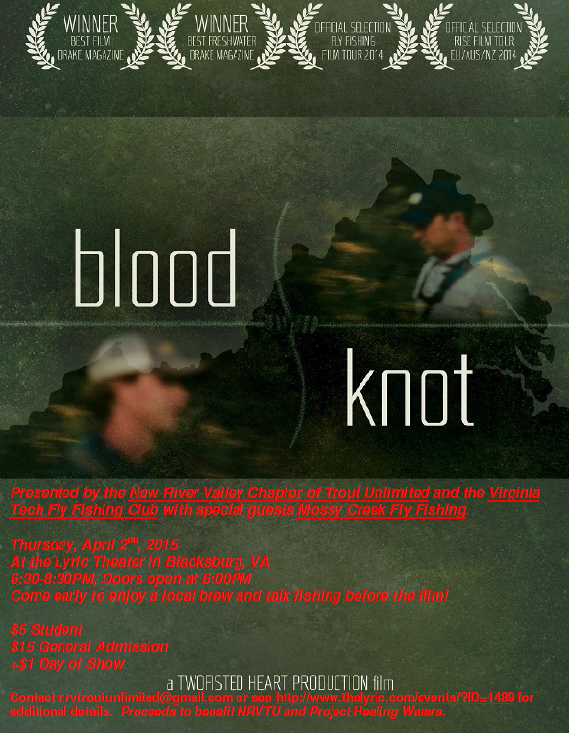
As mentioned above we’ll be sponsoring a film event at the Lyric Theater in Blacksburg on Thursday, April 2nd. This will be a Fly Fishing Film Tour type of event with a fun atmosphere in a great location. This event will take the place of our regularly scheduled meeting in April. We’re still working out a few of the details of the event but it should be a fantastic evening, so please mark your calendar and plan to attend with friends. We will be showing the award winning Blood Knot put together by the talented folks at TwoFisted Heart and Mossy Creek Fly Fishing. The Trow brothers of Mossy Creek Fly Fishing will be joining us for the event to introduce the film and for a short Q&A afterwards. Also planned for the event are numerous door prizes, some great raffle items, we’re working on having a local brewery join us to serve refreshments, and we plan to show a teaser for a film the VT Fly Fishing Club is working on. Proceeds from the event will be split between NRVTU and the VT Fly Fishing Club’s fundraiser for Project Healing Waters.
Also, we are actively looking for new stream conservation/restoration projects in the NRV, so if you have any leads, please let us know.
Cheers,
Jason Williams
NRVTU President
(540)391-0277
Upcoming Calendar of Events
February 26 – Planning meeting for the Blood Knot showing. We’ll meet at Bull and Bones at 6:00, all are welcome.
February 26 – 8:00-9:00pm TU online training “TroutBlitz – How to Help Monitor Local Trout Populations with a Fly Rod”. Click Here to sign up.
March 4 – Regular monthly meeting at the Montgomery County Government Center and dinner at Due South.
March 28 – Renew the New‘s Ramps N Roads Cleanup, the group will be cleaning boat ramps and roads in Giles County. Meet at Eastern Elementary School at 9am, lunch will be provided.
March 28 – Smith River TU‘s Smith River Cleanup, contact Al Kittredge at aakitt@earthlink.net for more info.
April 1 – No regular meeting.
April 2 – Blood Knot at the Lyric. Additional information to follow, contact Jason if you would like to help out with the planning committee at jwilly160@gmail.com Start spreading the word and let’s have a full house for this event!
April 11 – Project Healing Waters Fly Fishing Event in conjunction with the Virginia Tech Fly Fishing Club to be held on the South Holston River in Tennessee. VOLUNTEERS NEEDED! Please contact Andrew Loffredo for additional information at loffrean@vt.edu
April 18 – Elkhorn Creek Clean-up in conjunction with WV TU. Additional volunteers needed, we will carpool up from the NRV, contact Jason at jwilly160@gmail.com for additional information. We usually clean-up for half a day, have lunch provided, then fish in the afternoon.
April 18 – Trailblazer event at the Blue Ridge Scout Reservation in Hiwassee put on by the U.S. Sportsman’s Alliance, they have requested volunteers to teach flyfishing to kids. Please contact Keilee Guthrie at kguthrie@ussportsmen.org or (740)590-9096 for additional information. As an aside, folks that participate in this would get the chance to visit a property that has 17,500+ acres and several miles of wild trout streams open for hunting and fishing. We may even be able to identify potential conservation projects that we could team up with the Boy Scouts on.
April 18 – Southeast Regional TU meeting in Asheville, NC
May 6 – Regular monthly meeting at the Montgomery County Government Center and dinner at Due South.
June 6 – Mid-Atlantic Regional TU meeting in Frederick, MD
September 16-20 – TU Annual Meeting in Scranton, PA
Date TBD – Big Stony Creek Cleanup
Announcement: New River Valley Trout Unlimited “Thaw-Out” Special Event
When / Where / Time: Wednesday, February 4, Montgomery County Government Center, Christiansburg, 7PM
Guest Speaker: Bruce Ingram, Noted Author and Outdoor Writer
Topic: Hotspots and Tactics on the Upper New River and the Headwaters of the James Rivers
Q & A: Your chance to get the facts and inside tips for those “out of the way” but close places with any rig
Free Special Door Prize: Float Trip for 2 with Wes Hodges. Enjoy fishing with one of the best guides on the New River for Smallmouth and Muskie
Our Speaker: Bruce Ingram probably needs no introduction. He is our own gifted outdoor writer, author, and photographer home based in Botetourt.
Over his 31 year career, Bruce has written 5 books and authored more than 2100 magazine stories. Virginia Wildlife, American Angler and Fly Fisherman
are just a few of the publications that highlight his good work. Mr. Ingram’s ” Guide to the Best Smallmouth Rivers in VA and WV is a “must read”!
Bruce and his wife, Elaine Ingram were recently named 2014 Land Savers of the Year by the Blue Ridge Land Conservancy, so he “walks the talk” too.
Our chapter is delighted to present this memorable, no charge event to our membership and their friends and family as a benefit of their involvement with Trout Unlimited. Please contact: Pete Jackson at highpond1@hotmail.com if you have any questions. Seating is limited so come early.
A great evening will be had by ALL !!!
NRVTU Members & Friends,
Happy New Year! I hope everyone is having a great holiday season! Please join us for our next chapter meeting. Our January Chapter Meeting will be held this Wednesday, January 7th at 7pm at the Montgomery County Government Center in Christiansburg. We will have a pre-meeting meal at Due South BBQ at 6:00pm. The address for the Government Center can be found on the chapter website: https://nrvtu.wordpress.com/
This should be a good meeting as we’ll lay out our big plans for 2015, including potential conservation projects, a stream cleanup or two, a Project Healing Waters event, the TIC Program, and our yearly fundraiser. Also, please mark your calendars for the February 4th meeting, we’ll have our “Thawout” event and will be featuring Bruce Ingram as a speaker.
Cheers,
Jason
NRVTU Chapter President
(540)391-0277
NRVTU Members,
As discussed at our most recent meeting we will be submitting comments and suggestions to the potential developers of this pipeline. I don’t believe that many of us think this pipeline is a good idea, however if it is going to come through, we at least want them to minimize impact to our streams, mountains, and public lands. It is our hope that the comments we develop will be incorporated into the federal permitting and development requirements as part of the NEPA process. Below is a link to their website where you can review the proposed route, currently this crosses Big Stony, Little Stony, Mill Creek (Montgomery County), NF Roanoke River, among others. I would like to ask that you all take a few minutes to review this proposal and submit ideas/comments back to nrvtroutunlimited@gmail.com for incorporation into our letter. Please try to have these comments back to us as soon as possible, hopefully that will allow us to have a draft by our next meeting date of December 3.
http://mountainvalleypipeline.info/
We are also in the process of reaching out to TU National, the Virginia Council, and our neighboring chapters to make sure our responses are coordinated.
If you have any questions please don’t hesitate to ask and in the meantime if you have any additional information on this, please pass it on.
Thanks,
Jason Williams
NRVTU President
NRVTU Members & Friends,
Please join us for our chapter meeting this week. Our December Chapter Meeting will be held Wednesday, December 3rd at 7pm at the Montgomery County Government Center in Christiansburg. We will have a pre-meeting meal at Due South BBQ at 6:00pm.
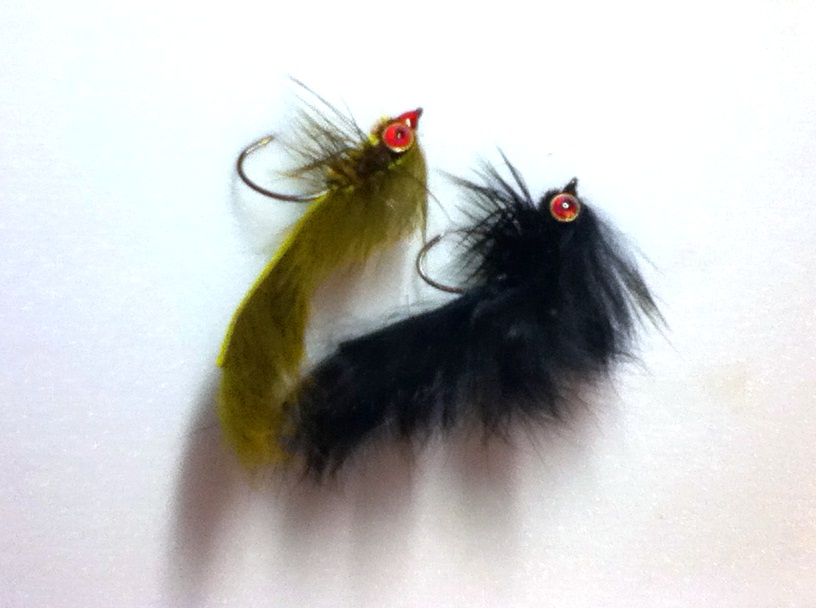
Bring your vise for a tying session! Garrett will also demonstrate how to tie his favorite rabbit streamer for bass as well as Russ Madden’s Circus Peanut for bass and big trout so if you have any extra lead eyes, chenille, schlappen, rubber legs, or rabbit in your favorite colors feel free to bring them along as well.
In addition to tying flies we will be discussing general chapter business including progress on the chapter’s response to the recently proposed Mountain Valley Pipeline.
Jason
NRVTU Chapter President
(540)391-0277
Hope everyone had a good Labor Day weekend! I know this is a busy time of year as summer comes to a close and schools start back up, but please join us for our chapter meeting tomorrow. Our September Chapter Meeting will be held Wednesday, September 3rd at 7pm at the Montgomery County Government Center in Christiansburg. Please see the chapter website for directions (https://nrvtu.wordpress.com/). We’ll have a pre-meeting meal at Due South BBQ at 6:00pm. We’ll have a recap of our banquet and discussion of ongoing and new projects.
We are currently seeking a new meeting venue in Blacksburg, so if you have any ideas or access to facilities that we could use, please let us know.
A big thanks to those that worked hard to make the banquet a success. We made roughly $3,500 to fund our education and conservation projects for the next year! A special thanks to Pete Jackson to heading up the Banquet Committee again!
There is a New River clean-up scheduled for Saturday, September 6th from 8:30 – Noon, this cleanup is being led by ReNew the New. If you are interested, please meet at Glen Lyn Park prior to 8:30 am on Saturday. See http://renewthenew.org/events.html for more information.
The New River Land Trust will hold their yearly Land and River Revel this Sunday in Blacksburg, those interested in attending can find more details here: http://www.newriverlandtrust.org/nrlt_bb/
Cheers,
Jason
This Sunday, August 17th is the NRVTU 3rd Annual Riverfest Banquet! Anyone, TU member or not is encouraged to come out and support the chapter with food, fun, and prizes generously donated by members of our community and the outdoor industry. The event is held at Sinkland Farms in Riner and begins at 4pm. The event is 35$/person, 60$/couple and 30$ for students for all you can eat and a chance to participate in the auction and raffles. For directions to Sinkland please visit: http://www.sinklandfarms.com/contactus.html
Riverfest is the main fundraising event for our chapter and 100% of the proceeds goes to local conservation efforts.
To RSVP please e-mail Pete at Highpond1@hotmail.com and we hope to see you there!
By all accounts the bass are finally on in a big way and very accessible on the fly on the New. The native streams in Giles have had great dry fly fishing this year as well. A good go-to is a #16 parachute hares ear but other people have good success on larger attractor patterns as well. For bass, try twitching a CK Minnow or other slow sinking baitfish imitation for the hardest strikes or a clawdad or other crayfish imitation if they are being fussy about coming up in the water column.
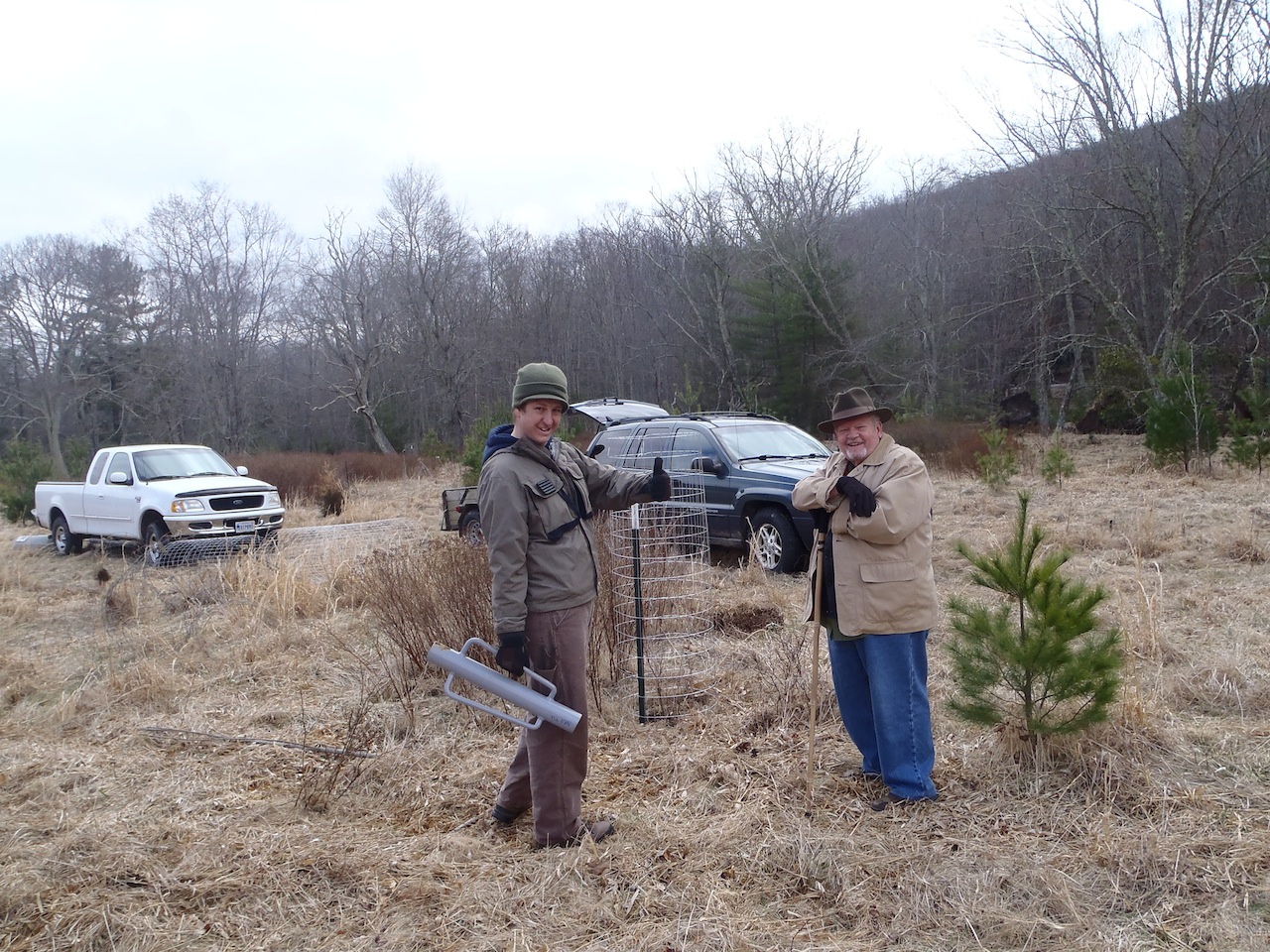
Attached are some photos from the tree planting up at Glen Alton from this April (plus some fishing, grilling and casting practice afterwards). Thanks Angelo for the pictures!




 New River Valley Trout Unlimited